Perfect for
- Wing Foiling
- Downwind Foiling
- Prone Foiling
- SUP Foiling
- Wake Foiling
- Freestyle
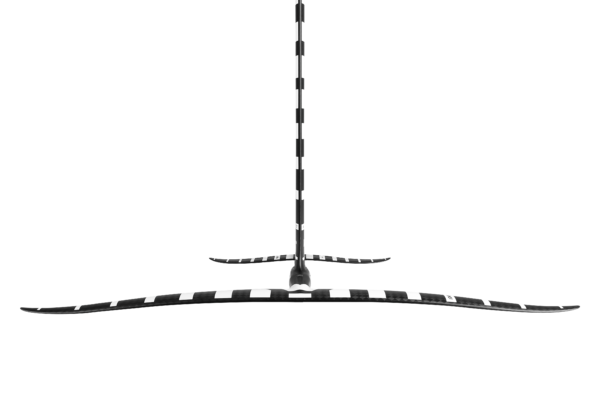
The Armstrong HA (High Aspect) Front Foil has been developed for riders who demand maximum efficiency, exceptional glide and outstanding speed without sacrificing the smooth, predictable handling that defines the Armstrong riding experience.
Designed with a high aspect ratio, the HA series generates remarkable lift while producing minimal drag. The result is effortless acceleration, incredible pumping efficiency and the ability to connect waves, link swells and cover long distances with ease.
Whether you're chasing ocean runners on a downwind mission, wing foiling in light winds or searching for the highest levels of efficiency, the HA range delivers performance that rewards refined technique and progressive riding.
For experienced foilers looking to push their riding further, the HA series opens up an entirely new level of glide.
✓ Exceptional glide efficiency
✓ Incredible pumping performance
✓ Earlier take-off than expected
✓ Higher top-end speed
✓ Outstanding upwind performance
✓ Long-distance downwind capability
✓ Stable at speed
✓ Lightweight, efficient carbon construction
✓ Compatible with the complete Armstrong modular system
High Aspect (HA) foils feature a longer wingspan relative to their surface area.
Compared with mid-aspect foils they offer:
The trade-off is a slightly larger turning radius and a more technical riding style, making the HA range ideal for riders focused on efficiency rather than ultra-tight carving.
| Size | Best For | Wind Range* | Rider Weight | Level |
|---|---|---|---|---|
| 680 cm² | Maximum speed | 25+ knots | Advanced | ★★★★★ |
| 780 cm² | Strong wind freeride | 20–30 knots | Intermediate–Advanced | ★★★★★ |
| 880 cm² | Everyday performance | 15–25 knots | 60–85 kg | ★★★★★ |
| 980 cm² | All-round efficiency | 12–22 knots | 70–95 kg | ★★★★★ |
| 1080 cm² | Light wind | 10–18 knots | 75–100 kg | ★★★★★ |
| 1180 cm² | Downwind & SUP | 8–16 knots | 80 kg+ | ★★★★★ |
| 1380 cm² | Maximum glide | 6–14 knots | Heavy riders & light wind specialists | ★★★★★ |
*Wind ranges are indicative and depend on rider weight, board volume, foil setup and local conditions.
Designed for experienced riders looking for maximum speed, aggressive riding and strong-wind performance.
An outstanding choice for powered wing foiling with excellent acceleration and remarkable efficiency.
A favourite among lighter riders wanting one foil that combines speed, glide and everyday usability.
The sweet spot of the HA range.
Providing an exceptional balance between early lift, pumping efficiency and high-speed performance, the 980 is one of the most versatile high-aspect foils available.
Excellent for lighter winds and larger riders while retaining the signature glide that defines the HA series.
Perfect for long downwind runs, efficient pumping and connecting endless swell lines.
The ultimate light-wind machine.
Designed for riders seeking the earliest possible lift and the longest, most effortless glides.
This setup delivers effortless glide, excellent upwind performance and outstanding efficiency for long freeride sessions and connecting rolling ocean swell.
Yes. The HA series is designed to maximise glide and speed while reducing drag, making it noticeably more efficient over distance.
The HA range offers some of the best pumping efficiency in the Armstrong lineup, especially in the larger sizes.
While larger HA models are manageable for progressing riders, most beginners will find the MA Mk II easier to learn due to its more forgiving handling and tighter turning characteristics.
For most riders between 70 and 90 kg, the 980 cm² offers the best balance between light-wind performance, speed and versatility.
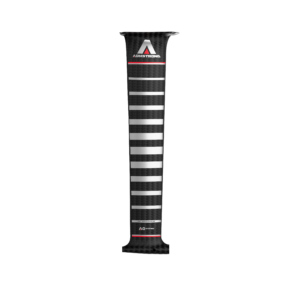
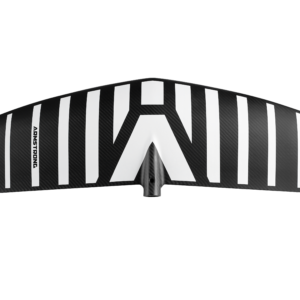
The Armstrong HA Front Foil is built for riders who value efficiency above all else. If your goal is to fly farther, pump longer, ride faster and connect every swell with minimal effort, the HA range delivers a truly addictive experience. Smooth, fast and incredibly efficient, it represents the pinnacle of high-aspect foiling performance within the Armstrong ecosystem.
Sea Links City, Villa PE68, Km 9 Đường Nguyễn Thông, khu phố 1, Phan Thiết, Lâm Đồng 800000, Vietnam
hello@foillabmuine.com
